Paulownia Climate Change Benefits
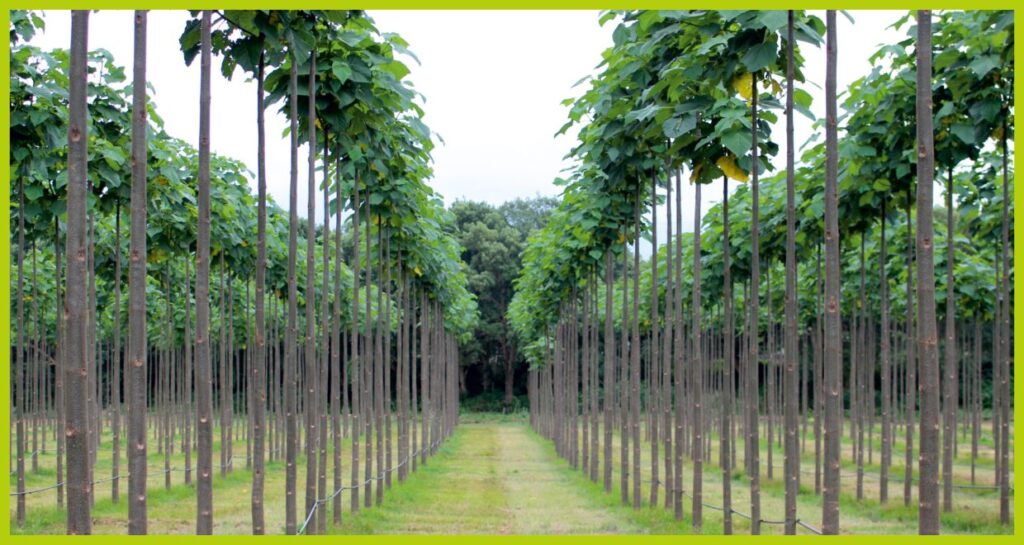
Paulownia climate change benefits are increasingly recognized for their environmental and economic value. This fast-growing tree not only provides sustainable timber but also plays a significant role in reducing carbon emissions. Understanding its advantages is essential for communities, investors, and environmental advocates.
1. Carbon Sequestration with Paulownia
Paulownia climate change benefits start with its exceptional carbon capture. Its broad leaves absorb CO₂ efficiently, and because it grows quickly, it stores carbon faster than many other hardwoods. As a result, planting Paulownia contributes directly to lowering greenhouse gas levels.
2. Restoring Degraded Land
The tree’s deep root system prevents soil erosion and improves soil quality. Therefore, planting Paulownia on degraded land helps restore fertility while supporting biodiversity. Communities benefit because it stabilizes land, making it suitable for other crops or forestry initiatives.
3. Forestry Investment Advantages
Investing in Paulownia links climate action with financial returns. Because its timber is lightweight, strong, and highly demanded, investors enjoy sustainable profits. Each tree planted captures carbon, meaning every investment also contributes to combating climate change.
4. Reducing Pressure on Native Forests
Overharvesting native forests accelerates climate change. By providing an alternative timber source, Paulownia reduces the need to cut natural forests. Its rapid growth cycle—maturing in 8–10 years—ensures a steady supply, protecting ecosystems while meeting timber demand.
5. A Tree for a Sustainable Future
Paulownia is more than just a timber source; it is a climate-smart tree. Its growth speed, carbon capture ability, and ecological resilience make it a practical solution for global reforestation. Countries focusing on climate mitigation increasingly recognize these benefits.
Final Thoughts
The Paulownia climate change benefits are clear: carbon sequestration, land restoration, and sustainable timber production. By embracing this tree, investors and communities can promote environmental sustainability while creating economic opportunities. Planting Paulownia today supports a greener, more sustainable future.